In short. The gap between Intel Xeon 6 and AMD EPYC 9005 is smaller than the gap between a good and a bad configuration: licensing by cores drives the choice. VMware counts a minimum of 16 cores per socket, so dense chips with 64 to 128 cores work out better than a fleet of 16-core machines. Xeon 6 offers up to 128 P-cores and twelve memory channels; EPYC 9005 reaches 192 Zen 5c cores at 155 to 500 W. Flagships at 500 W are rarely needed by mid-sized business: an office server room carries 3 to 5 kW per rack.
Choosing a processor for a virtualisation cluster stopped being an argument about clock speeds long ago. The numbers that matter now are different: how many virtual machines fit on a node, what the licences for those cores cost, and whether the server room can carry the heat of current silicon.
What the two families are
Intel Xeon 6 is the generation code-named Granite Rapids, launched in September 2024. The line splits into two families with different sockets. The 6900P series targets AP platforms: up to 128 performance cores per processor, twelve memory channels and up to 500 W per die. The flagship 6980P has 128 cores and 256 threads, a 2.0 GHz base clock, 3.2 GHz under all-core load and 504 MB of L3 cache. The 6700P series targets mainstream SP platforms: eight memory channels, but with the option of two modules per channel.
Intel also offers versions with efficient E-cores (Sierra Forest): they have no multithreading but reach 288 cores per processor on the AP platform. That is a specialised option for large uniform workloads such as web front ends and microservices, not a universal replacement for P-cores.
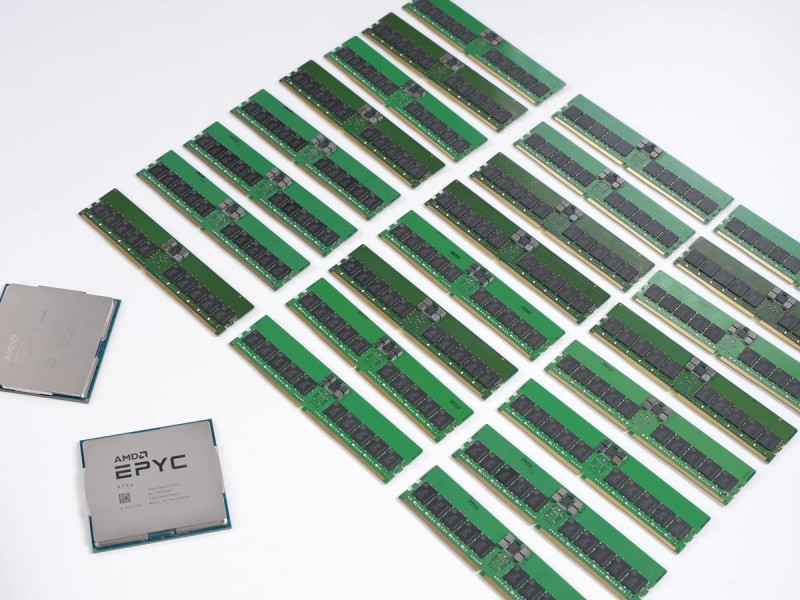
AMD EPYC 9005 is the fifth generation, code-named Turin. Its range is wider than the competition's: from 8 to 192 cores and from 155 to 500 W. It contains two core types. Classic Zen 5 delivers up to 128 cores and up to 512 MB of L3 cache. Dense Zen 5c cores, built on a 3 nm process, deliver up to 192 cores and 384 MB of cache — that is the 9965 flagship with 384 threads. There are twelve memory channels, as on Intel's top series.
The decisive argument in 2026: licences are counted by cores
This is the case where software cost dictates hardware choice. Since VMware moved to subscriptions, licensing follows cores with two minimums. First, no fewer than sixteen cores per socket, even where the processor physically has twelve. Second, a 72-core minimum order introduced in April 2025 and withdrawn later the same year. While it applied, a company with a single eight-core server still paid for 72 cores; today only the 16-core-per-socket floor remains.
Two practical conclusions follow. First, buying processors with fewer than sixteen cores for VMware is pointless — you pay for sixteen regardless. Second, the fewer physical nodes at the same total capacity, the fewer cores lost to minimums. Dense processors with 64 to 128 cores beat a set of 16-core machines even when the hardware price alone does not show it.
The same logic applies to Windows Server, where Datacenter and Standard are counted by the server's physical cores with their own minimums. Project cost has to be calculated together with licences, or the saving on a processor turns into a much larger overpayment for software. A three-year comparison is in Proxmox or VMware in 2026, and current catalogue processors with sockets and prices are in the server processors guide.
The key parameters compared
| Parameter | Intel Xeon 6 (Granite Rapids) | AMD EPYC 9005 (Turin) |
|---|---|---|
| Maximum cores per processor | 128 P-cores (6900P series); up to 288 E-cores in the efficient version | 128 Zen 5 cores or 192 Zen 5c cores |
| L3 cache | up to 504 MB (6980P) | up to 512 MB on Zen 5, up to 384 MB on Zen 5c |
| Memory channels | 12 on the 6900P series, 8 on the 6700P | 12 across the line |
| Memory speed | DDR5-6400, up to 8800 MT/s with MRDIMM | DDR5-6400 |
| TDP range | up to 500 W on top models | 155 to 500 W |
| Multithreading | on P-cores, absent on E-cores | across the whole line |
On paper the divergence is small: both platforms reached twelve memory channels and half a kilowatt per socket. The difference shows in the details. Intel holds the MRDIMM card, which lifts bandwidth where the workload is genuinely memory-bound. AMD offers a wider choice at the lower end and the highest core density in a single socket.
What that means by workload
Dense general-purpose virtualisation. Cores per socket and memory per node decide: the more virtual machines per host, the fewer nodes, licences and switch ports. Top EPYC parts and top Xeon 6900P parts are strong here. A practical reference: for 60 to 100 moderate virtual machines per node, look at processors from 48 cores and 512 GB of memory upwards.
Databases. Total cores matter less than clock speed, cache and memory latency. Large L3 caches help on both platforms, but the choice is usually dictated by database licensing: commercial databases are also licensed per core, and a processor with fewer fast cores can cost less to run than a dense chip.
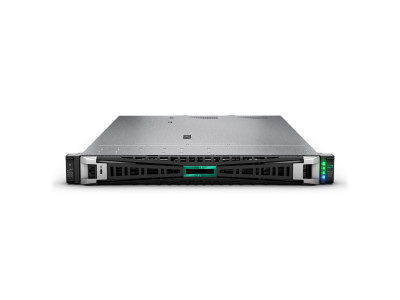
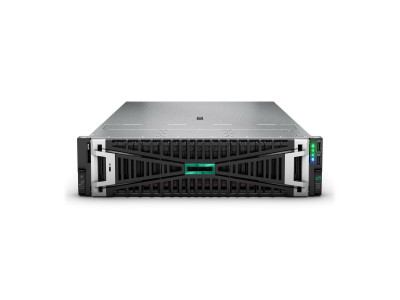
Mixed mid-market workloads. Flagships are excessive. The sensible point is mid-range dual-socket servers: HPE ProLiant DL380 Gen11 and Dell PowerEdge R760 on Intel, HPE ProLiant DL385 Gen11 and DL365 Gen11 on AMD EPYC. These platforms accept a broad range of processors, so the configuration can be tuned precisely to the licensing minimums.
The constraint remembered last: power and cooling
A 500 W processor is not only an electricity bill. A dual-socket server with top chips, full memory and drives passes a kilowatt under load easily. A rack of ten such machines needs more than ten kilowatts delivered and the matching heat rejection, while a typical office server room is sized for three to five kilowatts per rack.
So before choosing top processors, check three things: how many kilowatts reach the room, what the UPS can carry including runtime, and whether the air conditioning absorbs the extra heat. It often turns out that two mid-range servers fit the existing infrastructure while one flagship does not. The room preparation checklist is in a server room in the office.
How to choose in practice
Start not with the processor but with the sizing: how many virtual machines, how many cores and how much memory each, what headroom for growth and for node failure. Divide the resulting core count across nodes so that the cluster survives losing one. Then price the licences for that configuration — and only then pick a specific processor model.
On typical mid-market workloads the difference between Intel and AMD today is smaller than the difference between a good and a bad configuration of either. Memory capacity and channel population, drive type and how precisely the core count matches licensing minimums all weigh more heavily on the result.
When a generation upgrade pays off
Replacing working servers for the sake of a newer generation rarely pays. Three triggers justify the maths. First, vendor support on the current machines has ended or is ending, so the risk of downtime waiting for a part outweighs the cost of renewal. Second, nodes have run out of memory or cores with no slots left to fill. Third and weightiest: consolidation. If five old dual-socket servers become two new ones, the saving lands on licences, electricity and rack space at once, and the project pays back within a couple of years.
The reverse case also exists: if the load is stable, support is current and memory slots are free, adding memory and drives to the existing machines is cheaper. Upgrading for the sake of a line in a specification is the worst purchasing scenario.
Related guides and tools: Virtualisation server, Server configurator.
Questions and answers
Two nodes with 32 cores or one with 64?
On licences, usually the single 64-core node, because minimums are per socket. On resilience, two nodes, otherwise one server failure stops everything. In practice nobody builds a cluster of fewer than two nodes, and beyond that you pick the smallest node count where losing one does not drop the service.
Does a mid-sized business need 500 W processors?
Almost never. Those parts belong in dense data centres with prepared power and cooling. A typical office server room carries three to five kilowatts per rack, which two mid-range dual-socket servers already approach.
Which platform is better for a VMware cluster?
Both work equally well; the deciding factor is core count against the licensing minimums and the memory you can fit per node. Price the configuration with licences on both platforms and compare the totals rather than the processors.
To size a configuration for a specific workload and cost it with licences, write to us. Platforms on both architectures are in the Servers section: HPE ProLiant and Dell PowerEdge.