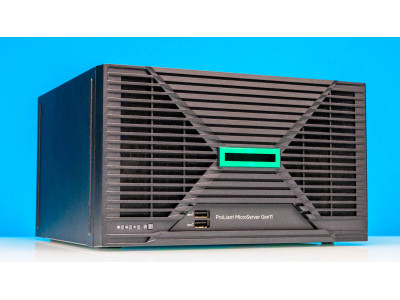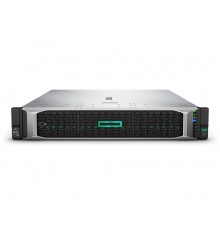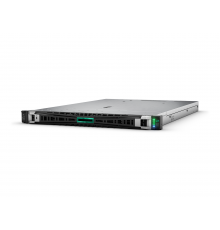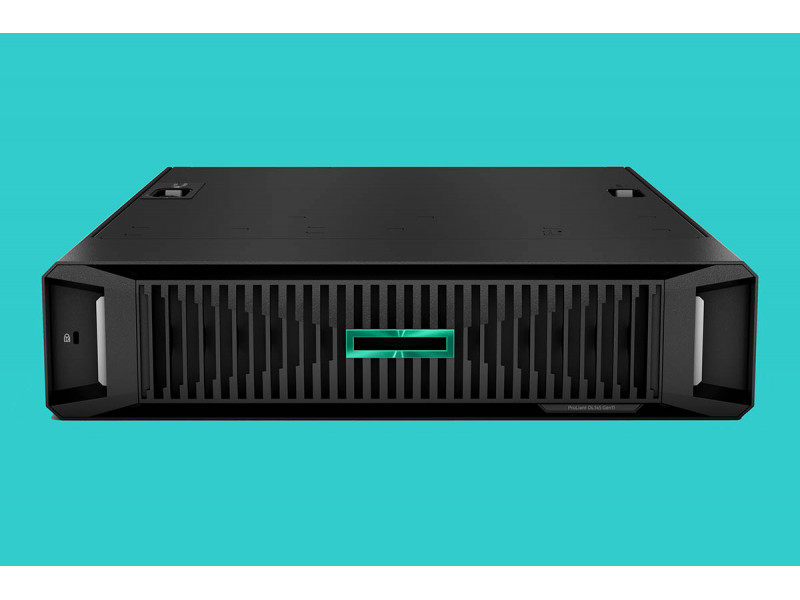
In short. The DL145 Gen11 is HPE's server platform for edge sites: a single AMD EPYC 8004 (Siena) processor, a short-depth 2U chassis, a wider operating temperature range and room for an accelerator. What matters here is not performance but dimensions and operating conditions: the machine is designed for shallow cabinets in workshops, shops and telecom nodes where a normal 2U simply does not fit. It is not in the ITsmart catalogue — supplied to order; from stock, branch workloads are covered by the DL320 Gen11 (41 000 000 UZS) and the ML30 Gen11 (31 000 000 UZS).
All HPE ProLiant configurations with prices →
Jump to: cabinet depth · EPYC 8004 · temperature, dust and power · what it is for · what is available now · questions and answers
Cabinet depth — the parameter everyone forgets
A normal 2U rack server is about 75 cm deep. A wall or floor cabinet in a shop's back room, a workshop or a telecom node is usually 45–60 cm. The server does not fit, and that becomes clear on site once the equipment has already been delivered.
The DL145 Gen11 exists for exactly this case: the chassis is short enough to fit a shallow cabinet together with a switch and a UPS. That is not a marketing detail but the reason the platform is a separate line at all.
Practical advice: before ordering any rack server, measure not only the height in units but the internal depth of the cabinet between the front and rear rails, and add 10–15 cm for cables and bend radius. A server that "just fits" runs with its own hot exhaust.
EPYC 8004: why a separate line
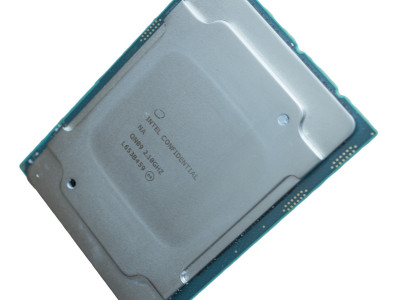
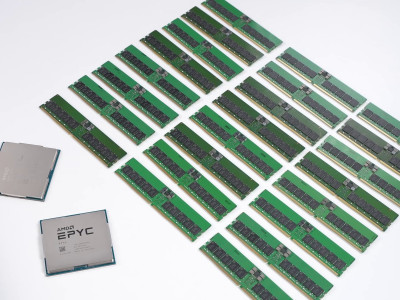
Siena is an EPYC designed not for maximum cores but for limited power and cooling. Hence its traits: one socket, six memory channels instead of twelve on the larger EPYCs, a lower thermal envelope and a lower price.
For the edge that is the right trade. On a site where the whole cabinet has one and a half to two kilowatts including the air conditioner, a server with a 400 W processor is not just unnecessary but harmful: it drags along reinforced cooling and a second UPS.
If the workload does demand maximum cores and memory, the DL145 is the wrong class: look at general-purpose single-socket machines such as the DL320 Gen11 or at the dual-socket DL380 Gen11 (49 000 000 UZS).
Temperature, dust and power
- Temperature. Edge platforms are rated for a wider range than ordinary rack servers. But "extended range" does not mean "no air conditioning needed": it buys headroom for a cooling failure, not a permanent operating mode.
- Dust. In a workshop filters clog in months, not years. Put a cleaning schedule into the maintenance plan from day one, or the power supply will be the first casualty.
- Power. Edge sites see more sags and outages than an office. A UPS is mandatory, and on an unstaffed site so is remote power control through iLO, so a hung node can be rebooted without a site visit.
What it is for
- On-site video surveillance. Recording locally instead of pushing streams to the centre over a thin link. Archive sizing and ready bundles are on our server for video surveillance page.
- Local branch services. Domain, files, 1C, printing — everything that must keep working when the link to head office goes down.
- Industrial and telecom nodes. Collecting data from equipment, pre-processing it, buffering before sending upstream.
- Inference on site. Recognition, video analytics, any model that is cheaper to run locally than to pay for bandwidth.
What is available now
| Model | Class | Price |
|---|---|---|
| HPE ProLiant DL320 Gen11 | general-purpose single-socket 1U | 41 000 000 UZS |
| HPE ProLiant ML30 Gen11 | tower for a branch without a rack | 31 000 000 UZS |
| HPE MicroServer Gen10 Plus | compact, four drives | 32 000 000 UZS |
| HPE ProLiant DL380 Gen11 | dual-socket 2U when headroom is needed | 49 000 000 UZS |
If the site has no rack at all, depth stops being a problem — and a tower beats any rack solution. That fork is discussed in our DL320 Gen11 review.
We will match the platform to the actual cabinet and site conditions, measuring depth and sizing power and cooling. Get in touch.
Questions and answers
What is an edge server and how does it differ from a normal one?
It is a server for a site with no server room: a shorter chassis, a wider operating temperature range, low power draw and an emphasis on remote management. In raw compute it is usually more modest than a rack server of the same generation — the job is different.
Which processor does the DL145 Gen11 use?
A single-socket AMD EPYC 8004 (Siena) — a line with six memory channels and a reduced thermal envelope, designed for the limited power and cooling of edge sites.
Will a normal server fit a shallow cabinet?
A normal 2U at about 75 cm deep will not go into a 45–60 cm cabinet. Measure the internal depth between the front and rear rails and add 10–15 cm for cables — that is the only way not to discover the problem on site.
Is the DL145 Gen11 available in Tashkent?
Not in the ITsmart catalogue yet — supplied to order, with lead time and price on request. From stock, branch workloads are covered by the DL320 Gen11 at 41 000 000 UZS and the ML30 Gen11 at 31 000 000 UZS.